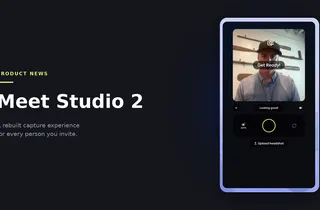
Industry Guide
Guide to Medical Headshots
Medical headshots show up everywhere a patient is deciding who to trust. Provider directories on Healthgrades and Doximity, hospital ID badges, ERAS residency applications, telehealth platforms, and practice websites. A low-quality headshot loses patients, applicants, and referrals before anyone ever walks in. So we wrote this guide to help your hospital, medical group, residency cohort, or solo practice plan, capture, and manage professional headshots for physicians, nurses, residents, and admin staff. The modern, seamless way.
Why Headshots Matter for Medical Teams
In medicine, trust is the product. Before a patient picks up the phone, before a residency program reviews an application, before a referring physician sends a colleague to a specialist, the headshot has already done a meaningful chunk of the work.
The research is unambiguous. Industry surveys consistently find that 52% of patients pick a provider with a professional photo and a 4-star rating over a provider with no photo and a 5-star rating. The preference rises to 59% among parents choosing a pediatrician and 58% among millennials picking any provider. Providers with profile photos are viewed 2x as often as those without. The headshot is the front door of the patient relationship, and a thin or missing one quietly costs new patients every week.
For an individual physician or nurse, a current professional photo is table stakes. For a medical group, a hospital system, or a residency program, it's something larger: an institutional trust play across hundreds of placements, from Healthgrades to ERAS to ID badges. When a patient lands on the medical group's team page and sees fifty providers with mismatched photo styles, dated portraits, and missing entries, the practice reads as a loose collection of independents rather than a coordinated team.
This matters most during trigger moments. The annual ERAS cycle, where medical students apply to residency programs and need spec-perfect photos by mid-September. New attendings starting July 1 each year. A clinic acquisition where two practices merge and need to unify their team pages overnight. A travel-nurse contract surge where the hospital onboards 30 new clinical staff in two weeks. A telehealth rollout where the network adds 200 providers across multiple states. Each one creates a window where every team member's headshot suddenly has to be current, on-brand, and platform-correct at the same time.
The challenge isn't whether medical teams need professional headshots. It's how to get them done across a workforce that runs 24/7 shifts, spans multiple campuses, and includes everyone from a chief of cardiology to a per-diem CNA, on a calendar that doesn't pause for a photographer.

Who This Guide Helps
Hospital Systems
Multi-campus, multi-specialty teams managing hundreds of providers across Healthgrades, Doximity, hospital websites, ID badges, EHR avatars, and telehealth platforms. The brand-cohesion play.
Medical Groups & Practices
Independent and PE-backed groups with 5 to 200 providers across primary care and specialty. Team page consistency, new-hire onboarding, and clinic-acquisition merges are the recurring jobs.
GME Offices & Residency Programs
Annual ERAS cycle for fourth-year medical students applying out each September. New attendings rotating in every July. Spec-perfect AAMC photos at scale on a fixed academic calendar.
Individual Providers
Physicians, NPs, PAs, and nurses managing their own profile across Healthgrades, Doximity, the practice website, and the patient portal. The personal directory presence that drives new-patient bookings.
What Professional Medical Headshots Look Like
Medical headshots vary by role more than almost any other vertical. A physician's white coat communicates something specific. So does a nurse's pressed scrubs, a resident applicant's blazer (no coat), and a hospital admin's business professional. Pair the role and the attire correctly and the headshot does its work. Get it wrong and the photo reads as confused or off-brand.
Match Attire to Role

Physicians
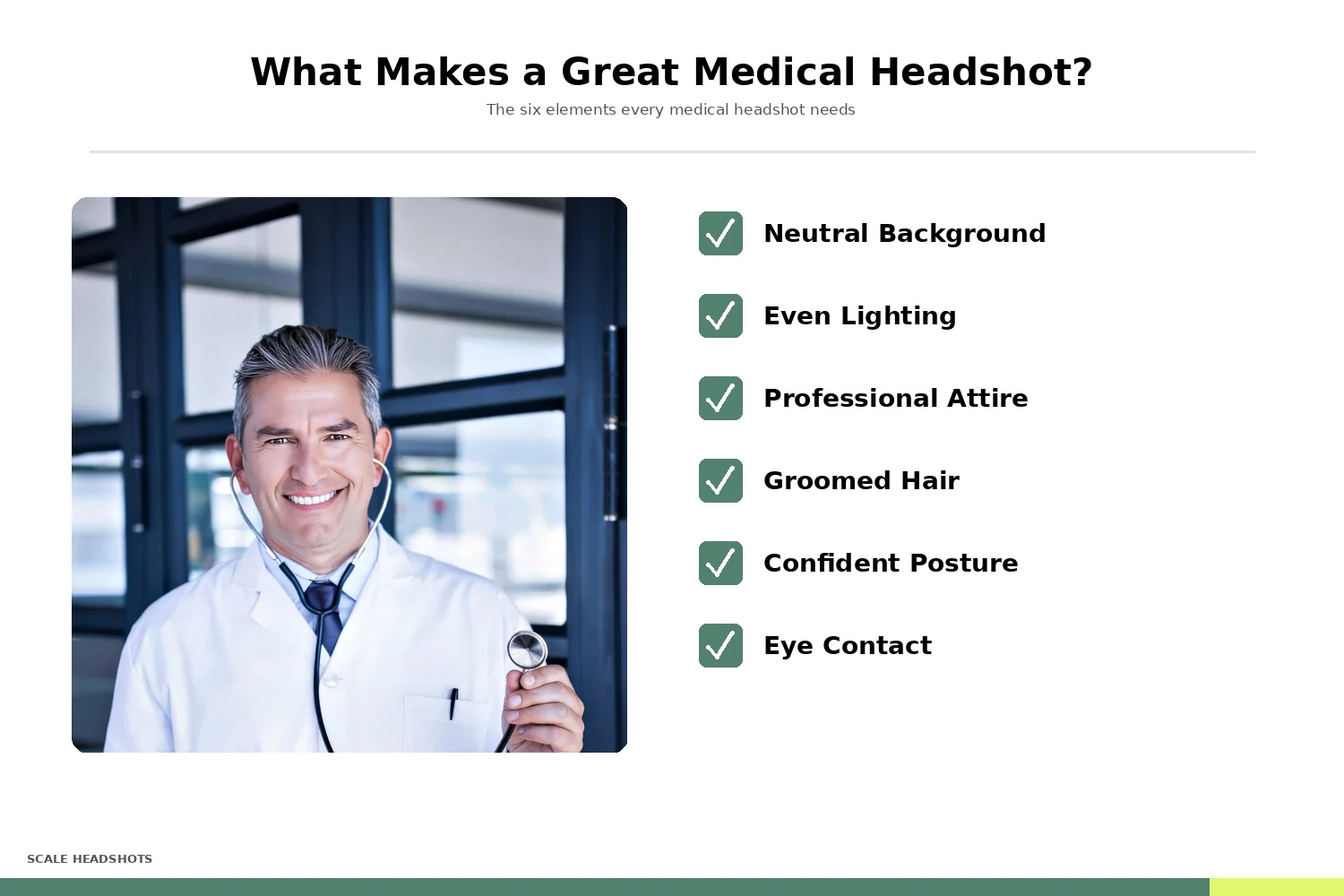
White lab coat over business professional. Solid shirt or blouse, no tie required for most modern settings. Stethoscope optional, drape naturally if used. The coat communicates physician instantly on provider directories.

ERAS Applicants
Professional attire without the white coat. Button-down shirt or polished blouse, blazer or suit jacket, light background. Program directors want to see the person, not the aspirational role. The coat comes after match.
Nurses & Clinical Staff
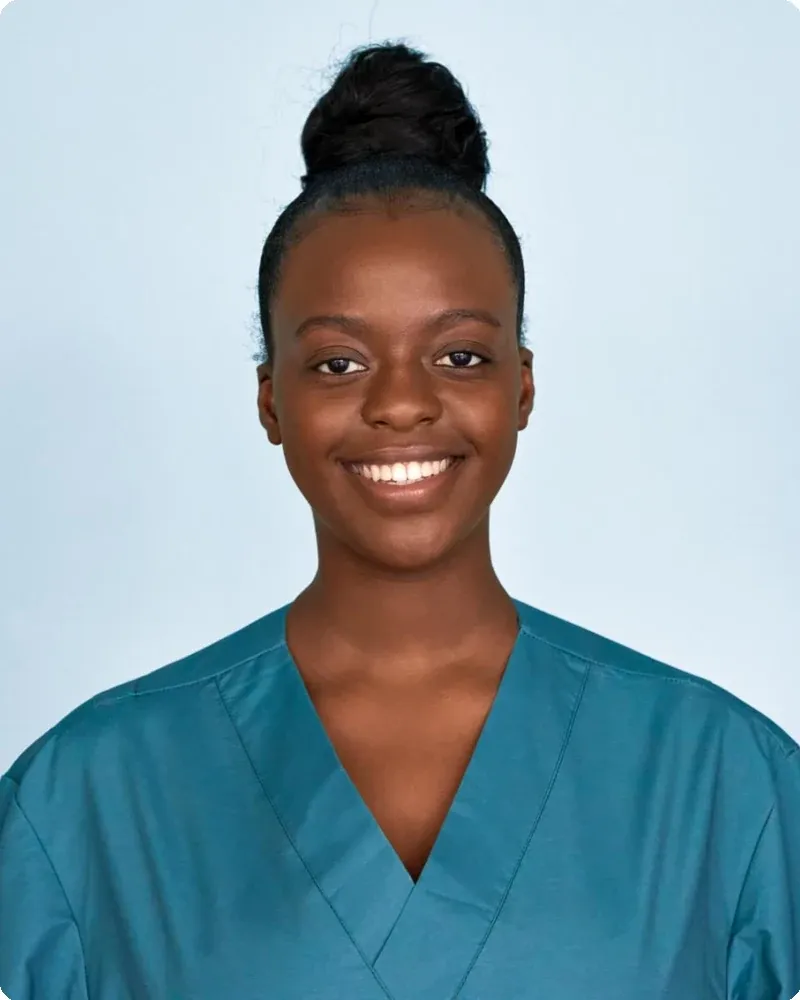
Clean, pressed scrubs in a solid color. Solid colors photograph far better than patterns at small sizes (hospital directory thumbnails crop tight). Match the institution's scrub color standard if there is one.

Healthcare Admin
Business professional. Blazer over a solid blouse or dress shirt. Same standards as the executive headshot world, slightly warmer in expression for the About page and the annual report.
AAMC ERAS Photo Specs (2026-2027)
The Electronic Residency Application Service has strict photo requirements. Get them wrong and the application gets flagged. Plan 4-6 weeks before the mid-September deadline.
AAMC ERAS Photo GuidelinesDimensions: 2.5 × 3.5 inches at 150 dpi.
Format: JPEG or PNG, max 150 KB file size.
Background: white, light gray, or light blue.
Composition: head and shoulders, face centered, eyes at upper third of frame.
Attire: button-down or blouse plus blazer or suit. No white coat.
Expression: natural slight smile, professional and approachable.
Universal Standards
Expression carries serious weight in medical headshots. Patients pick providers on warmth and competence at the same time, and the classic stiff corporate stare reads as cold and unapproachable. Lean toward a slight, genuine smile that suggests competence with empathy. Industry research finds that a smile showing some teeth builds significantly more trust than a closed-mouth one, with the caveat that an overly broad grin can read as performative.
Backgrounds should be simple and consistent across the team. Neutral solids (white, soft gray, navy, beige) translate well across every placement from Healthgrades thumbnails to print annual reports. Environmental backgrounds (in a clinical setting, a hospital corridor, an exam room) can work for individual marketing photos but are nearly impossible to replicate across a 200-provider hospital, and they create visual chaos on the directory.
Framing is head-and-shoulders or upper-chest, with the face centered. Provider directory photos and ERAS submissions both crop tight, so leave a bit of space around the head. You can always tighten later. You can't recover pixels.
The single biggest quality issue medical teams face isn't any one provider's photo. It's the inconsistency across the team.
See Real Examples
Browse 180+ real team headshots by industry, or compare 20 before-and-after enhancements.

The Medical Coordination Problem
Ask any hospital HR director, medical group practice administrator, GME office coordinator, or telehealth operations lead about updating the team's headshots and you'll hear the same story. Getting every clinician photographed with a consistent look is a logistical nightmare.
Medical workforces operate on schedules that don't pause for a photographer:
A 24/7 hospital with clinical staff cycling through three shifts.
A multi-campus system with providers split across cities.
A residency program with new attendings rotating in every July and dozens of senior residents applying out through ERAS every September.
A medical group acquiring a clinic, inheriting 40 new providers with mismatched photos from six different photographers.
A telehealth network onboarding 200 providers across 30 states that can't fly anyone anywhere.
Traditional photography wasn't built for any of these. It's built for one room, one photographer, one half-day window.
The cost compounds. A headshot day for 100 providers at a per-person rate of $300 to $500 lands somewhere between $30,000 and $50,000 once retouching, licensing, and travel are factored in. The moment a new attending starts in July or a residency cohort starts ERAS in August, the cycle resets.
The result is what most medical group team pages and provider directories actually look like. A patchwork of professional studio photos from a 2019 session, white-coat selfies, vacation cropouts, and missing entries with a generic silhouette where a face should be. The CMO spends every rebrand cycle chasing missing photos. The HR director spends every onboarding fielding requests for new-hire photos. The GME office spends every August getting fourth-years through ERAS photo sessions before the September deadline. The marketing team spends every quarter fielding requests for re-edits in seven different brand colors.
Headshots for the Whole Hospital, Not Just Physicians
Patients and referrers don't only meet doctors. They meet the nurse who returns the call, the PA who runs the follow-up, the care coordinator who books the procedure, the therapist who manages recovery, and the front-desk and billing staff whose names appear in the patient portal. A hospital system is thousands of people across clinical, allied health, administrative, and executive roles, and a growing share of them now show up in a directory, on a badge, on a team page, or in a telehealth profile. The headshot problem isn't a physician problem. It's a workforce problem.
That's exactly where consistency breaks down. A health system can run one polished session for its 200 physicians and still have mismatched or missing photos for the 2,000 nurses, technicians, and support staff around them. Different departments use different photographers, different years, different backgrounds. The org reads as fragmented the moment you scroll past the providers.
Scale captures every role the same way, regardless of title, department, or location. A travel nurse on a 13-week contract, a new-grad cohort starting in June, an executive joining after an acquisition, and a board member who visits twice a year all use the same invite link and the same brand standard. New hires capture on day one instead of waiting for the next photo day. And because an admin reviews and approves every headshot before it publishes, the system controls exactly who appears and where, from 5 people to 50,000+. One standard, one photo, every format, across the entire staff.
How to Capture a Medical Headshot Without a Studio
You don't need a $5,000 hospital-wide headshot day to get team photos that work. Modern smartphone cameras produce professional-quality results when paired with a few fundamentals. For a medical workforce that can't pause for a photographer, the trick is removing as much friction as possible so each provider's capture takes 15 minutes, on their own schedule, between cases.
1. Lighting
Natural light from a large window is ideal. Position the provider facing the window (not with the window behind them) so light falls evenly across the face. Avoid harsh overhead fluorescent lighting, which is unfortunately what most clinical environments have; it creates shadows under the eyes that read as fatigue.
Mid-morning or late afternoon natural light is softest. Most hospital admin offices and provider lounges have at least one window that works, and providers capturing from home can find similar light in any room with a south- or east-facing window.
2. Background
Keep it clean and uncluttered. A solid wall in the office, the lounge, or at home works. If you're capturing headshots for the full medical group, use a consistent background type for every provider, or rely on a platform that replaces the background to match a single brand standard. ERAS submissions specifically require white, light gray, or light blue.
3. Camera Position
Eye level or slightly above. A phone mounted on a small tripod at about five feet high gives the most natural perspective. Avoid shooting from below (unflattering and dated) or too far above (diminishing).
4. Framing
Mid-chest up, with some space above the head. ERAS specs require head and shoulders with eyes at the upper third of the frame. Don't crop too tightly at capture. You can always adjust later.
5. Coaching and Posing
Most medical professionals are comfortable being seen, but not always being photographed. Position the provider at a slight angle to the lens, around 45 degrees, with the head turned back toward the camera. Direct head-on framing reads as a license photo. Fully turned reads as a magazine sidebar. The slight angle reads as natural and confident.
Have them drop their shoulders, push the chin slightly forward and down, and take a breath before each shot. Coach for a smile that shows a little teeth (the warmth-and-competence balance patients pick on) and have them think of something specific: a recent good outcome, a patient who came back to thank them, the colleague they trust most. Take several photos in quick succession. The best headshot is usually captured 30 seconds in, after the provider stops thinking about being photographed.
These basics work whether the provider is in the hospital admin office, a clinic exam room, the residency lounge, or at home between shifts. Same simple guidance for everyone, applied on whatever schedule fits the team's calendar.
Set Up Your Studio in 10 Minutes
Admins customize the branding and headshot styles, then send invites to providers and clinical staff. Each team member captures on their own schedule. Scale handles the rest.
Where Medical Headshots Get Used
Provider Directories
Healthgrades, Vitals, WebMD, Zocdoc. The first photo most patients see when searching by specialty or insurance.
Doximity
The LinkedIn for clinicians. ~30% of US physicians active. Where referrals, recruiters, and peer trust get built.
ERAS Applications
Annual residency cycle. Strict AAMC specs (2.5×3.5 in, max 150 KB). Every fourth-year medical student needs one by mid-September.
Hospital & Practice Websites
The team page is the public face of the institution. Inconsistent photos here read as organizational drift.
ID Badges & Internal Systems
EHR avatars (Epic, Cerner), badge prints, internal staff directories. High-volume placements that quietly reinforce brand cohesion.
Telehealth & Marketing
Telehealth platforms, patient portal welcome screens, brochures, annual reports. The last impression before a patient books.
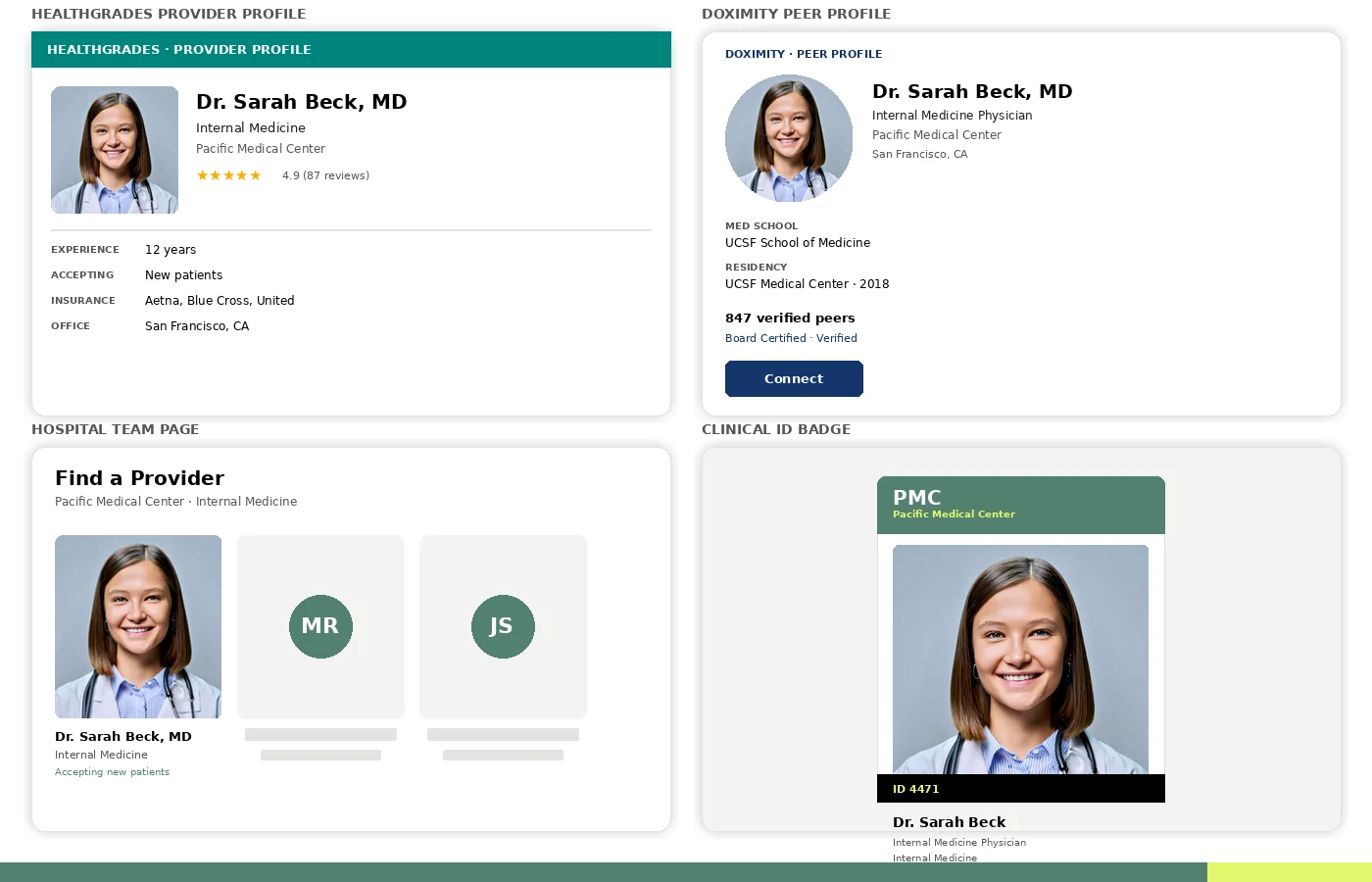
Each of these channels works from one photo, formatted for every placement. A single high-quality source image, exported to spec wherever it needs to land. No reshoot when the hospital rebrands. No second session when an attending updates a Doximity profile. No separate ERAS-specific shoot for the next class of fourth-years.
Why Scale
The Scale Advantage for Medical Teams
| Scale Headshots | Traditional Photography | |
|---|---|---|
| Cost per provider | Starting at $25 | $150-$500+ standard |
| Scheduling | Each provider self-serves between cases | Coordinate across patient panels and shifts |
| Multi-campus | Captures happen anywhere with a phone | Photographer rotates across hospitals |
| ERAS cycle | Same flow, ERAS-spec export per applicant | Separate batch session every August |
| New attendings (July 1 cohort) | Send invite link to each new hire | Rebook another session |
| Brand consistency | Automatic standard across all photos | Depends on photographer brief |
| Turnaround | Minutes per provider | Weeks for a full directory |
 Scale Headshots
How Much Could Your Hospital Save?
200 providers x $300-$500 traditional = $60,000 to $100,000. The same team with Scale: $5,000. 91-95%+ savings, credits never expire.
How Scale Headshots Works for Medical Teams
Scale Headshots is the self-service company headshots platform built for organizations that need professional, consistent headshots across a team, from 5 people to 50,000+, without the logistics of traditional photography. Here's how it works for a hospital system, medical group, or GME office.
1. Set Up Your Studio
An admin (HR Director, practice administrator, GME office coordinator, or marketing lead) creates your studio and customizes the branding, headshot styles, and formatting preferences in about ten minutes. Setup is free. You only pay for approved headshots.
2. Invite Your Team
Each provider receives a link to capture their headshot. They use their phone or laptop camera, following guided instructions for positioning, lighting, and framing. No app download required. The capture happens in the office, the provider lounge, at home between shifts, or wherever fits the schedule.
3. AI Enhances the Real Photo
Scale doesn't generate a synthetic image. It takes the actual photo your provider captured and enhances it: correcting lighting, removing the background, applying the institution's chosen style, upscaling quality. The result is a real photo of a real person, polished to professional standards. Authenticity matters in medicine; the patient meeting a physician at the appointment should see the same face they saw on Healthgrades.
4. Review and Approve
The admin reviews every headshot in a dashboard before it goes live. If a submission doesn't meet the standard, the provider can retake it (up to five retakes per credit). Quality control without anyone chasing down a reshoot.
5. Export for Every Placement
Once approved, each headshot can be exported for any use: Healthgrades thumbnail, Doximity profile, hospital website team page, ID badge, EHR avatar, telehealth platform, and ERAS-spec submission for residency applicants (2.5×3.5 in, JPEG, max 150 KB, light background). One capture, every placement.
6. Ongoing Access
When a new attending starts July 1, a fourth-year cohort needs ERAS photos in August, a clinic acquisition adds 40 providers, or a rebrand triggers a refresh, captures happen through the same platform. No need to rebook a photographer or coordinate across patient panels. Credits start at $25 per headshot, with volume pricing for hospitals, medical groups, and residency programs.
The outcome customers describe is simple: leveling up your branding across every place your providers show up.
Automate Headshot Delivery Across Your Hospital Stack
Scale's REST API with webhooks keeps provider headshots fresh across the systems your hospital already uses. HRIS, EHR avatars, provider directories, telehealth.
- Sync to hospital HRIS on hire (Workday, UKG, ADP).
- Push to EHR avatars (Epic, Cerner) and badge systems on credentialing.
- Update provider directories (Healthgrades, Doximity, Vitals) automatically.
- Feed telehealth platforms and patient portals with current headshots.

What teams are saying
Studio has significantly reduced that time spent, as backgrounds are pre-set and people are able to take their own headshots remotely without a professional photographer. It takes a lot of the legwork out of it.
— TNAA
Ready to Refresh Your Medical Team's Headshots?
Capture consistent, professional headshots across every provider, resident, and clinical staff member. No photographers. No scheduling. No editing. The modern, seamless way.
Headshots for your company size
Mid-size practices
Employee headshots that scale with hiring across a growing organization.
Employee HeadshotsHospital networks
Corporate headshots with API delivery and volume pricing for large teams.
Corporate HeadshotsMedical Headshot FAQ
What does a medical headshot cost?
A medical headshot from a traditional photographer runs $150 to $500 per provider for a standard session. Editorial-style sessions and major-metro markets push above $500, with branding-heavy packages running $700+. Full-day group shoots at hospitals and medical groups land between $3,500 and $6,000+ once retouching, licensing, and travel are factored in. Scale Headshots is the lower-cost alternative: credits start at $25 per headshot, with volume pricing for hospital systems, medical groups, and residency programs. Setup is free; you only pay for approved headshots.
What should a doctor wear for a headshot?
The gold standard for physicians is a white lab coat over business professional attire. Solid colored shirt or blouse underneath, no tie required for most modern settings (tie acceptable for traditional or east-coast institutions). The white coat immediately communicates 'physician' to patients scanning a provider directory. Solid colors photograph best at small sizes (Healthgrades thumbnails, ID badges). Avoid busy patterns, statement jewelry, and stethoscopes used as a prop (drape naturally if used at all).
Should you wear a white coat for an ERAS application photo?
No. The third-party consensus across photographers and admissions consultants is to skip the white coat for ERAS. As a medical student applying to residency, you haven't earned the coat in your specialty yet, and program directors evaluating thousands of applications want to see the person, not the aspirational role. Stick to a button-down shirt (white or light blue) with a blazer or suit jacket; women can use a polished blouse or sheath dress with a blazer. Save the coat for your post-match attending portrait.
What are the official ERAS photo requirements?
The AAMC's official ERAS specs for the 2026-2027 cycle are 2.5×3.5 inches at 150 dpi resolution, submitted as JPEG or PNG with a maximum 150 KB file size. Background must be white, light gray, or light blue (neutral solid). Composition: head and shoulders visible, face centered, eyes at approximately the upper third of the frame. Expression should be professional and approachable; a natural slight smile works well. Plan the session 4-6 weeks before the mid-September submission deadline so there's time for retakes if needed. Verify the current cycle's specs at students-residents.aamc.org before submitting; AAMC may update requirements between cycles.
What background works best for a medical headshot?
Neutral solid backgrounds (white, soft gray, navy, beige) are the safest choice and translate well across every placement from Healthgrades thumbnails to print annual reports. ERAS specifically requires white, light gray, or light blue. Environmental backgrounds (an exam room, hospital corridor, or clinical setting) can work for individual marketing photos but are nearly impossible to replicate across a 200-provider hospital and create visual chaos on the directory. With Scale Headshots, the admin sets a single standard background that's automatically applied to every provider's photo, so the team page and directory listings stay unified regardless of where each provider captured.
Can a medical headshot be captured with a phone?
Yes. Modern smartphone cameras produce professional-quality medical headshots when paired with three things: good natural lighting (a large window with the provider facing it works best), a clean uncluttered background (a solid wall in the office, lounge, or at home), and a phone mounted at eye level. Scale Headshots walks each provider through framing, lighting, and posture in a guided capture flow. The whole capture takes about 15 minutes between cases or shifts. AI enhancement handles background replacement, lighting correction, and brand-aligned styling, plus exports to ERAS-spec format for residency applicants.
How do you keep medical headshots consistent across hospital staff?
Scale Headshots applies the same background style, color treatment, and formatting to every provider's capture, regardless of where each person actually shot. The admin configures the institution's standard once at the platform level. Every submission renders against that standard automatically. The result is a unified team page and provider directory whether a cardiologist captured at the office, a hospitalist captured between cases, or a fourth-year resident captured at home for ERAS. New providers joining the hospital get an invite link to the existing studio and capture using the same setup, so directories stay unified through hires, residency cohorts, and rebrands.
How should you pose for a medical headshot?
Stand or sit at a slight angle to the camera, around 45 degrees, with the head turned back toward the lens. Direct head-on framing reads as a license photo. Fully turned reads as a magazine sidebar. The slight angle reads as natural and confident. Drop the shoulders so the posture is upright but not rigid. Push the chin slightly forward and down. Smile with the eyes, not just the mouth, and show a little teeth; the warmth-and-competence balance is what patients pick on. Avoid crossed arms, hands-on-hips, and head tilts past about 10 degrees.
Are AI-generated headshots a good choice for doctors?
No. AI-generated headshot tools create synthetic images trained on the provider's selfies. The output isn't actually a photo of the provider. Medicine is a relationship and trust profession; the patient meeting their physician for the first time should recognize the same face from Healthgrades and the hospital's website. A synthetic likeness, even a flattering one, breaks the trust signal and creates a recognition gap at the moment of care. Some state medical boards and telehealth platforms are also moving toward AI-content disclosure rules; a synthetic likeness on a credentialing system is a regulatory headache waiting to happen. Scale Headshots takes the opposite approach: real photos captured by the provider, enhanced through AI for quality (lighting, background, upscaling). Real photos, AI-enhanced quality.
Is there volume pricing for hospitals, medical groups, and residency programs?
Yes. Credits start at $25 per headshot for smaller practices. Volume pricing scales down significantly for hospital systems, multi-campus medical groups, and GME offices coordinating annual ERAS cohorts. For organizations doing a full enterprise headshot rollout (5 people to 50,000+), per-headshot cost drops below $10 at scale. Volume quotes are based on size, number of campuses, and refresh cadence (annual ERAS cycles, July attending intakes, telehealth network expansion).
Can Scale handle non-clinical and administrative hospital staff too?
Yes. Scale captures every role on the same flow, not just physicians and nurses. Allied health staff, technicians, therapists, pharmacists, administrative teams, and executive and board leadership all use the same invite link and the same brand standard, so a hospital system gets one consistent look across the entire workforce, not just the providers. New hires in any department capture on day one, and an admin reviews and approves every headshot before it publishes.
Still have questions? Get in touch and we'll be happy to help!